
Can Allergies Cause a Sore Throat?
Can allergies cause a sore throat? Here’s what might actually be happening
*Medically Reviewed by the Specialists at B&B Sinus and Allergy Relief Centers
Your throat has been scratchy for two weeks. No fever. No body aches. You haven't been around anyone sick. You've taken the cold medicine, drank the tea, and waited it out, but it keeps coming back, especially when you're outside.
If that sounds familiar, you're not imagining things. Allergies are one of the most common and most overlooked causes of a persistent sore throat. And in North Alabama and Middle Tennessee, where pollen seasons hit hard and overlap, it's a problem many people deal with for months at a time.
So, can allergies cause a sore throat? Yes, absolutely. Here's why it happens, how to tell it apart from a cold or infection, and what actually helps.
Schedule your allergy evaluation
Why do allergies cause a sore throat?
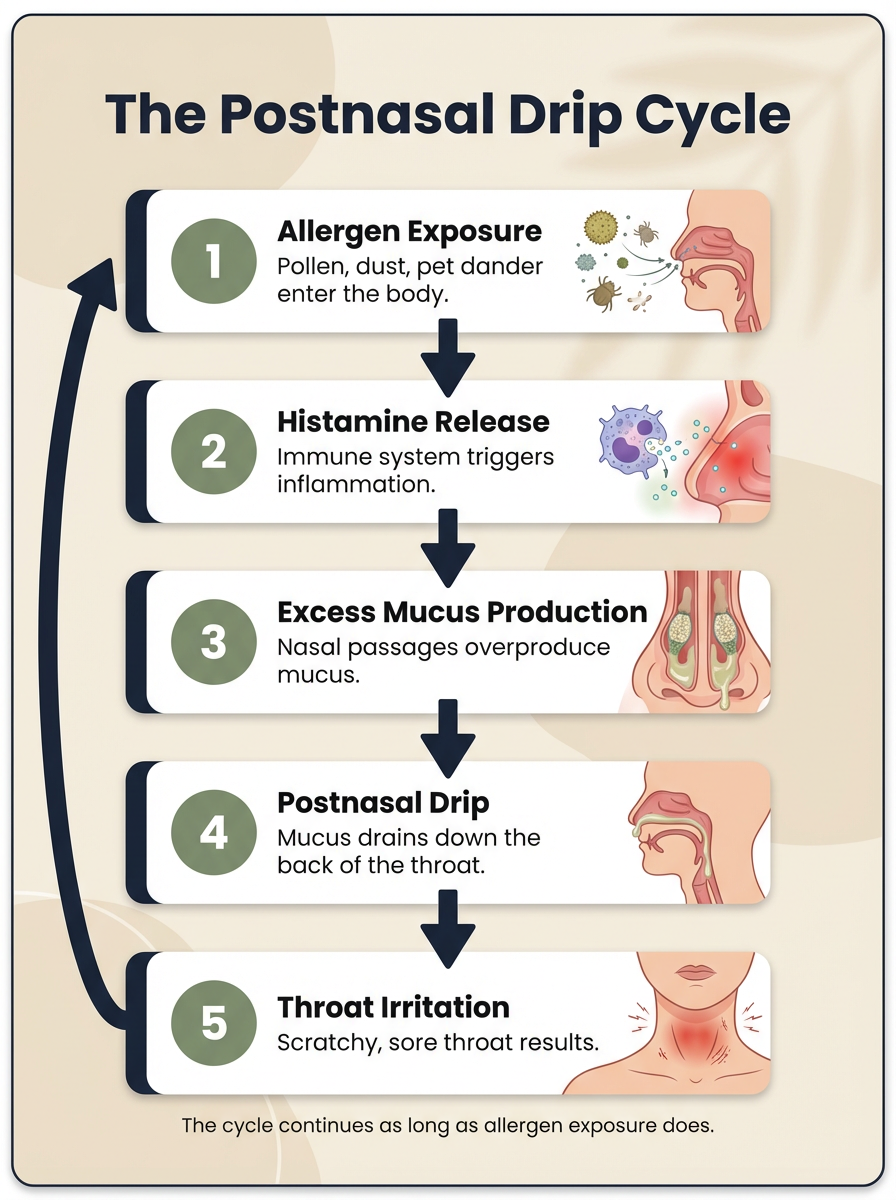
When your body encounters an allergen (pollen, dust mites, pet dander, mold, etc), your immune system treats it like a threat. It releases a chemical called histamine, which triggers inflammation and ramps up mucus production throughout your nasal passages and sinuses.
That extra mucus has to go somewhere. When it drains down the back of your throat instead of out through your nose, it's called postnasal drip. Postnasal drip is the primary reason allergies cause a sore throat. The constant trickle of mucus irritates the delicate lining of your throat, leaving it feeling raw, scratchy, and uncomfortable.
But postnasal drip isn't the only factor. Nasal congestion from allergies often forces you to breathe through your mouth, especially at night. Mouth breathing dries out your throat and adds to the irritation. If you're waking up with a sore throat that improves through the day, that's often why.
Allergic laryngitis: When allergies affect your voice
Some people experience a more specific condition called allergic laryngitis, in which allergic inflammation affects the larynx (voice box). When the tissues around the vocal cords swell, your voice can become hoarse or raspy, your throat can feel tight, and you may have a persistent tickling cough that won't quit.
Allergic laryngitis is commonly triggered by the same environmental allergens, and it's often mistaken for a lingering cold or vocal strain. Unlike a cold, it doesn't get better in a week. If your voice sounds different and your throat feels tight alongside other allergy symptoms, allergic laryngitis is worth discussing with a specialist.
Can allergies cause a sore throat without any other symptoms?
Yes, occasionally. Some people — especially those with mild allergen exposure — experience throat irritation as their primary or only symptom. If your sore throat is your only complaint but follows a seasonal pattern, allergies are still worth considering as the cause.
Common allergy triggers in Alabama and Tennessee
The timing of your sore throat is one of the most useful clues. Here's what's typically in the air across this region and when:
- Tree pollen (February–May) — one of the biggest offenders in North Alabama. Oak, cedar, and birch are major culprits. Spring sore throats often trace back to this.
- Grass pollen (May–July) — follows tree season closely and can extend the sore throat misery well into summer.
- Ragweed (August–October) — hits hard in both Alabama and Tennessee. If your throat acts up every fall, ragweed is likely involved.
- Dust mites and mold — year-round indoor triggers. If your sore throat doesn't follow a seasonal pattern, these may be the culprit.
- Pet dander — also year-round, and often underestimated as a trigger for throat symptoms.
If your sore throat arrives around the same time each year and disappears when the season changes, you now know why. And you know it's not going to get better on its own until the allergen exposure does.
What actually helps
There's a range of options, and where you start depends on how severe and how frequent your symptoms are.
At home
- Stay hydrated — water thins mucus and helps flush allergens from your system
- Use a saline nasal rinse — clears allergens and excess mucus from nasal passages
- Run an air purifier indoors, especially in the bedroom
- Sleep with your head slightly elevated to reduce postnasal drip at night
- Shower after spending time outdoors to remove pollen from skin and hair
- Warm liquids — tea with honey, broth — temporarily soothe an irritated throat
Over-the-counter options
- Antihistamines (like cetirizine or loratadine) block histamine and reduce mucus production.
- Nasal corticosteroid sprays (like fluticasone or budesonide) reduce inflammation in the nasal passages and cut down on postnasal drip.
- Decongestants can help with congestion but should be used short-term only — long-term use can make congestion worse.
OTC options work well for mild, occasional symptoms. If your sore throat is recurring every season and disrupting your daily life, they're probably not going to be enough on their own.
Professional allergy treatment
When allergies are severe, year-round, or not responding to over-the-counter management, allergy testing and treatment can address the root cause rather than just the symptoms. Allergy testing identifies exactly what you're reacting to. Treatment — whether through immunotherapy or other approaches — works by gradually reducing your immune system's overreaction to specific allergens, providing longer-lasting relief than any medication can offer on its own.
When should you see a specialist?
Most mild allergy-related sore throats can be managed at home or with OTC medications. But it's worth making an appointment if:
- Your sore throat has lasted more than two to three weeks without improvement
- It returns every year at the same time and disrupts your work, sleep, or daily routine
- You've tried antihistamines and nasal sprays without meaningful relief
- Your voice has changed or you're experiencing hoarseness alongside your sore throat
- You're not sure whether allergies, an infection, or something else is causing your symptoms
A specialist can confirm the cause, test for specific allergens, and develop a treatment plan that addresses the root cause, not just the sore throat.
Tired of the same sore throat every season?
B&B Sinus and Allergy Relief Centers can help you figure out what's causing it — and what to do about it. Schedule a consultation today.
Schedule your allergy evaluation
*This article is for informational purposes only and does not constitute medical advice, diagnosis, or treatment. Always consult with your healthcare provider about your specific symptoms and health concerns. B&B Sinus and Allergy Relief Centers provides sinus and allergy care with locations in Florence, AL, and Lawrenceburg, TN.