

Can a Deviated Septum Be Fixed Without Surgery?
Can a Deviated Septum Be Fixed Without Surgery?
*Medically Reviewed by the Specialists at B&B Sinus and Allergy Relief Centers

You felt fine at lunch. By dinner, your nose was starting to clog. By bedtime, you could barely breathe through it. You stacked an extra pillow. You tried the nasal spray. You lie there staring at the ceiling, breathing through your mouth, wondering why this always happens at night.
It is not bad luck, and it’s not in your head. There are real, physiological reasons why sinus symptoms get worse when you lie down, and understanding them is the first step toward actually doing something about it.
What happens to your sinuses when you lie down
During the day, gravity helps your sinuses drain. Mucus flows downward and out, keeping your nasal passages relatively clear. When you stand or sit, your circulatory system also works against the natural pressure in your head, keeping blood vessels in the nasal tissue from overfilling.
The moment you lie flat, both of those advantages disappear. Blood flow to the nasal tissues increases, causing the lining to swell. Mucus that was draining downward starts to pool instead. The sinus openings, which are already small, can get partially blocked by that swelling. Pressure builds. The congestion you barely noticed at two in the afternoon becomes genuinely difficult to breathe through by midnight.
Which is why even people without a chronic sinus condition often notice their noses get stuffy when they go to bed. For people who do have chronic inflammation from allergies, sinusitis, or a structural issue, lying down takes what is already a compromised system and makes it significantly worse.
Your bedroom may be making it worse
There is another factor that often gets overlooked: you spend six to nine hours in your bedroom every night. That is a long time to be in close contact with whatever is in that air.
Dust mites live in mattresses, pillows, and bedding. Pet dander concentrates in rooms where animals sleep or spend time. Mold can grow in humid bedrooms, especially in warm climates like the South, where humidity stays high for much of the year. If you are allergic to any of these things, your bedroom is not a safe haven. It is a prolonged exposure event.
Many people who struggle specifically with nighttime congestion find that their bedroom environment is a significant part of the problem, sometimes the primary one. The symptoms feel like a sinus condition, but the driver is actually an allergy to something in the room where they sleep.
The most common reasons nighttime sinus symptoms get worse
There is rarely a single cause. Most people with persistent nighttime sinus problems have more than one thing contributing. The most common drivers are:
- Allergies to bedroom allergens. Dust mites, pet dander, and mold are the primary culprits. If symptoms are consistently worse in the morning when you first wake up, bedroom allergens are a strong suspect.
- Chronic sinusitis. If the sinus passages are already inflamed and partially blocked during the day, lying down removes the gravitational drainage that was keeping things manageable. The same amount of inflammation that was tolerable upright becomes intolerable in the horizontal position.
- A deviated septum or other structural issue. A septum that is not centered or enlarged turbinates can restrict airflow on one or both sides. During the day, you may compensate without realizing it. At night, with the added swelling from lying down, the restriction becomes more pronounced.
- Acid reflux. Gastroesophageal reflux disease can cause acid to travel up toward the throat and nasal passages when lying down, triggering inflammation that mimics sinus symptoms. If your nighttime congestion is accompanied by a sour taste, throat clearing, or a cough, reflux may be a factor worth investigating.
- Dry air. Heating systems in winter and air conditioning in summer both reduce indoor humidity. Dry air irritates and dries out the nasal lining, causing it to produce more mucus. The result is congestion unrelated to infection or allergy.
Things that can help in the short term
If you are dealing with nighttime sinus symptoms tonight, these are the approaches most likely to provide some relief:
- Elevate your head. Sleeping with your head raised six to eight inches reduces the pooling effect of lying flat. A wedge pillow is more effective than stacking regular pillows, which tend to shift.
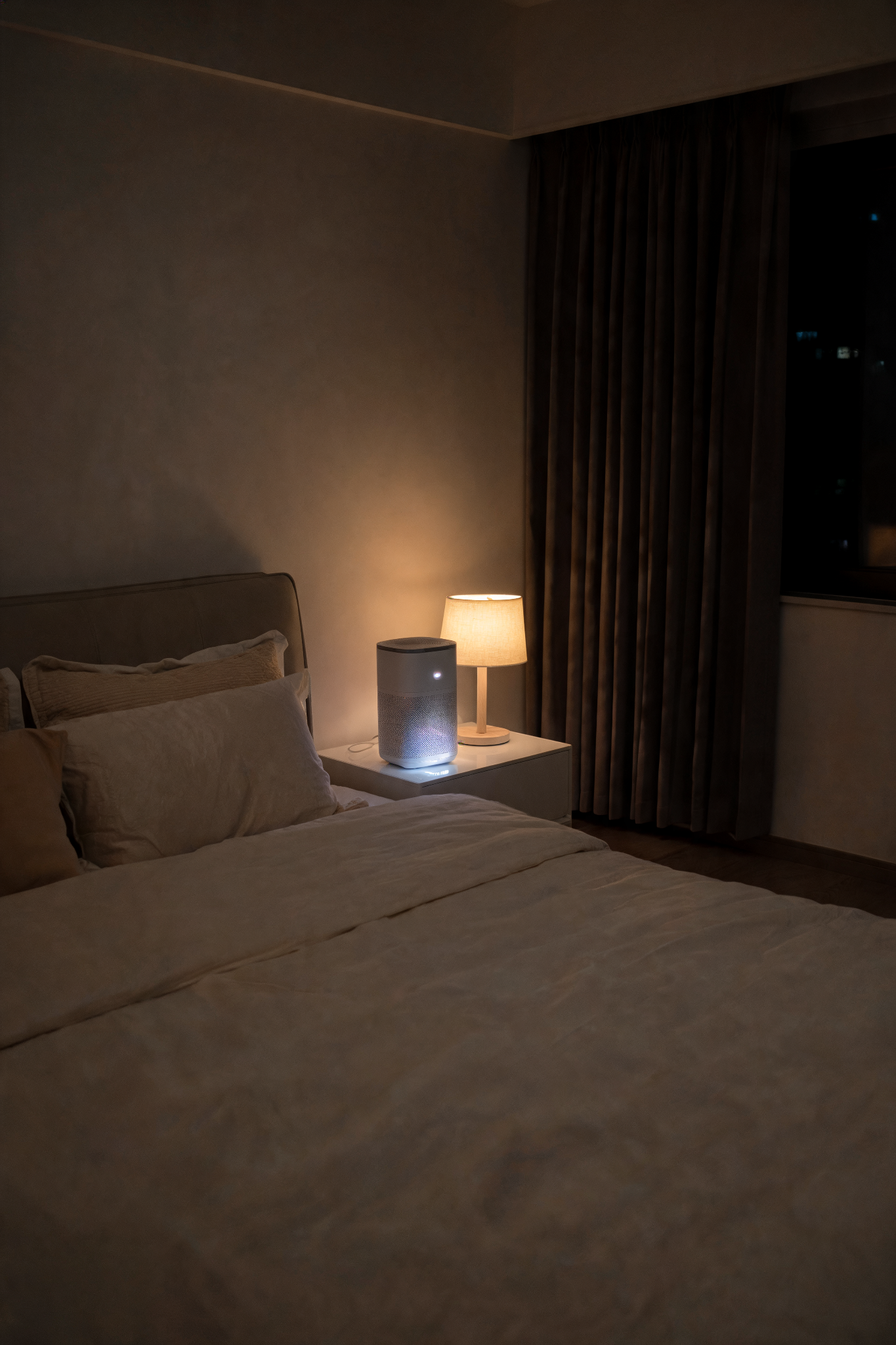
- Run a HEPA air purifier in your bedroom. This reduces the concentration of airborne allergens, particularly dust mite particles and pet dander, over the course of the night.
- Use a saline nasal rinse before bed. This clears allergens and excess mucus from the nasal passages before you lie down, giving you a cleaner baseline going into sleep.
- Keep pets out of the bedroom. If you are sensitive to pet dander, this single change can make a significant difference.
- Run your humidifier if the air is dry, or your dehumidifier if the bedroom is humid. Both extremes aggravate the nasal lining.
These measures can make nights more manageable. They do not address the underlying cause.
When nighttime symptoms are a sign of something that needs to be treated
Waking up consistently congested, breathing through your mouth all night, or lying awake because you cannot breathe comfortably is not something you should just accept. It disrupts sleep in ways that compound over time, affecting your energy, mood, concentration, and immune function.
If your nighttime sinus symptoms are occurring more nights than not, have been going on for weeks or months, or are not responding to the usual home measures, they are worth evaluating properly. The pattern matters as much as the symptom.
- If the problem is allergy-driven, allergy testing can identify the specific triggers, and treatment can reduce your immune system's overreaction to them over time, improving your symptoms at the source rather than just managing them night to night.
- If the problem is structural, a physical exam and possibly imaging can reveal whether a deviated septum, enlarged turbinates, or narrowed sinus openings are restricting your airflow in a way that will not resolve without intervention.
- If the problem is chronic sinusitis, treatment that addresses the underlying inflammation, rather than just the symptoms, can break the cycle of congestion that disrupts your sleep every night.
You should not have to dread going to bed. Getting an accurate diagnosis is the first step toward sleeping like a person who can breathe.
Tired of lying awake because you cannot breathe?
B&B Sinus and Allergy Relief Centers can help you figure out what is actually causing your nighttime symptoms and find a treatment plan that addresses it. Schedule a consultation at one of our Alabama or Tennessee locations.
*This article is for informational purposes only and does not constitute medical advice, diagnosis, or treatment. Always consult with your healthcare provider about your specific symptoms and health concerns. B&B Sinus and Allergy Relief Centers provides sinus and allergy care with locations in Florence, AL, and Lawrenceburg, TN.