
Why Do My Sinuses Feel Worse at Night?
Why Do My Sinuses Feel Worse at Night?
*Medically Reviewed by the Specialists at B&B Sinus and Allergy Relief Centers
If you have been told you have a deviated septum, the first question most people ask is whether they need
surgery. It is a reasonable concern. Surgery sounds significant, and for a lot of people, it triggers images of a long recovery, a changed appearance, and a procedure they would rather avoid if there is any other option.
Here is the honest answer: Surgery is the only way to physically straighten a deviated septum. No medication, no spray, no device can move bone and cartilage back into the correct position.
But that does not mean surgery is always necessary. For many people with a deviated septum, the goal is not to fix the anatomy. It is to breathe better and feel better. And that is often achievable without going into an operating room.
What a deviated septum actually is
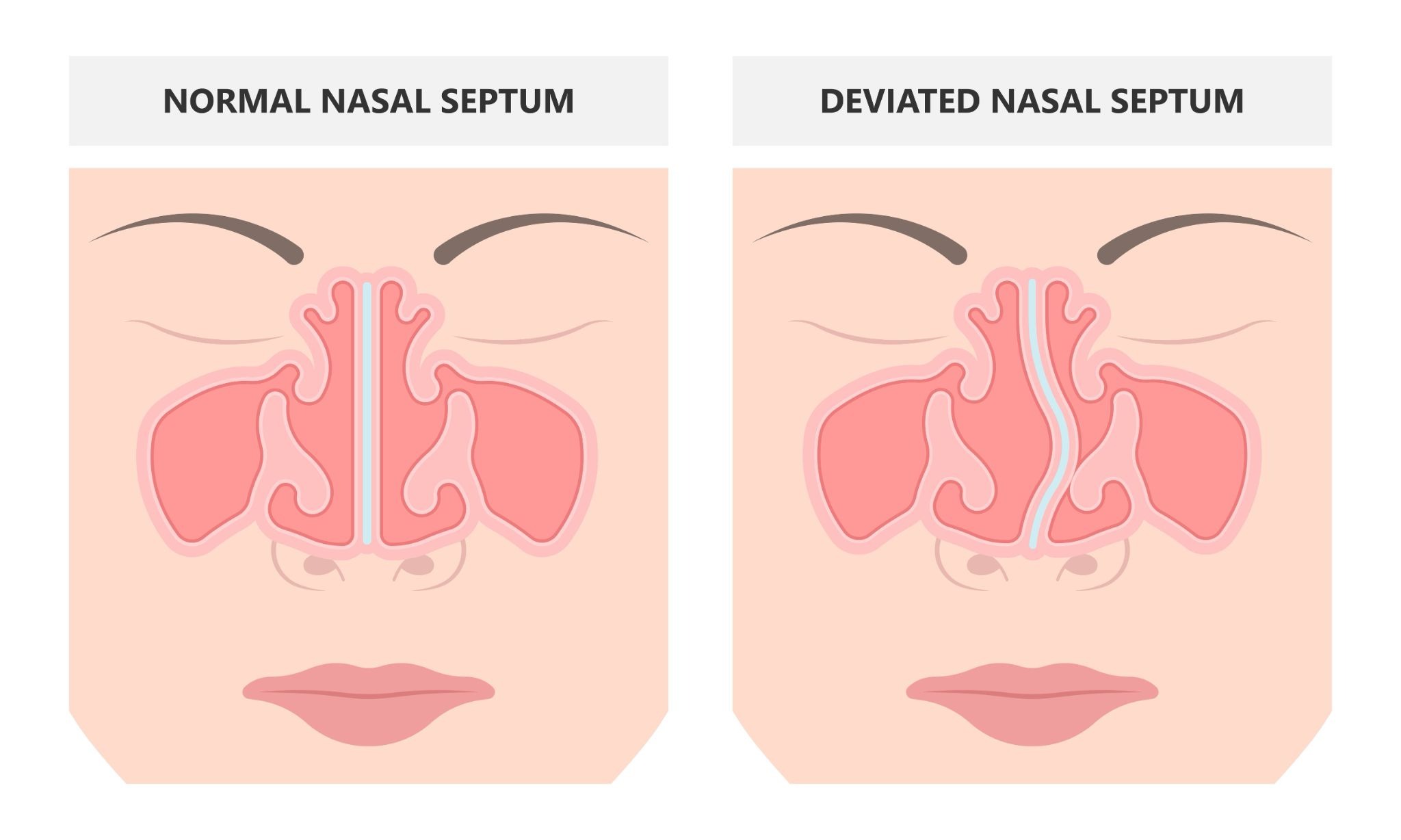
The septum is the wall of bone and cartilage that runs down the center of your nose, dividing it into two nasal passages. In an ideal world, it sits perfectly centered, giving equal airflow through both sides. In reality, research estimates that somewhere between 70 and 80 percent of people have some degree of septal deviation.
Most of those people never know it and never need to do anything about it. The deviation is minor enough that airflow is not meaningfully affected. Symptoms only become a problem when the deviation is significant enough to narrow one or both passages to a point where normal breathing, drainage, or sleep is compromised.
Symptoms of a deviated septum that is causing problems include:
- Chronic congestion or blockage on one side of the nose, or both
- Difficulty breathing through the nose, especially during exercise or while lying down
- Frequent sinus infections, because impaired drainage creates conditions where bacteria thrive
- Recurring nosebleeds from the drying effect of uneven airflow
- Noisy breathing or snoring during sleep
- Sleep disruption from nighttime congestion
If you recognize several of these, a deviated septum may be contributing. But there is an important nuance worth understanding before you conclude surgery is necessary.
Why the septum is often only part of the story
A deviated septum creates a structural narrowing in one or both

nasal passages. But how much that narrowing affects you day to day depends significantly on what else is happening in those passages.
Inflammation from allergies, swelling of the turbinates (the tissue-covered bony structures inside your nose), and mucus buildup from chronic sinusitis can all make a moderate structural deviation feel much worse than it structurally is. Think of it as a partially blocked road: the deviation is the road narrowing, but allergy inflammation and congestion are the traffic jam on top of it.
This is why two people can have a similar degree of septal deviation and have completely different experiences. One person barely notices it. The other struggles to breathe through their nose every day. The difference is often what else is going on in the nasal lining.
It also means that treating those additional factors, even without touching the septum itself, can make a significant difference in how you actually feel and breathe.
What non-surgical treatment can do
Non-surgical options cannot physically move your septum. What they can do is reduce the swelling, inflammation, and mucus buildup that are making a structural narrowing feel worse than it needs to. For many patients, that reduction in secondary factors is enough to make a meaningful difference in daily breathing and quality of life.
The most effective non-surgical options include:
- Nasal corticosteroid sprays such as fluticasone or budesonide reduce inflammation in the nasal lining and turbinate tissue. This directly addresses one of the factors that amplifies the effect of a structural deviation. Used consistently over several weeks, they often produce significant improvement in airflow, even with no change to the septum itself.
- Antihistamines help if allergies are contributing to the nasal inflammation. Treating the allergic component reduces the swelling that is stacking on top of the structural narrowing.
- Saline rinses clear mucus and allergens from nasal passages, reduce crusting, and keep the nasal lining moist. They do not treat inflammation directly but remove the debris that contributes to blockage.
- Allergy testing and treatment if allergies are a significant driver of your symptoms, identifying and addressing them at the source is one of the most effective ways to improve nasal breathing without surgery. If your immune system stops overreacting to allergens, the inflammation that narrows your already-compromised airway goes down significantly.
- Decongestants provide short-term relief by shrinking swollen nasal tissue. They should not be used for more than a few days at a time because prolonged use causes rebound congestion that can make things worse than before.
When surgery is the right answer
For some people, non-surgical management provides enough relief that surgery never becomes necessary. Treatment begins there, and for a meaningful portion of patients it is sufficient.
But there is a category of patient for whom the structural deviation is severe enough that reducing inflammation around it is not going to be enough. If the septum is significantly off-center, if it is causing near-complete blockage on one side, or if non-surgical treatments have been tried for several months without meaningful improvement, surgery is usually the appropriate next step.
Septoplasty is the procedure used to correct a deviated septum. It is performed entirely through the inside of the nose. There are no external incisions and no changes to the outward appearance of the nose. Most patients return to normal activity within a week, though full internal healing takes longer.
The goal of a good evaluation is not to push patients toward surgery. It is to figure out honestly whether surgery is likely to make a significant difference for a specific patient, and to try non-surgical options first when there is a reasonable chance they will work.
How to figure out which situation you are in
The honest answer is that you need an evaluation to know. There is no way to assess the severity of a septal deviation or understand what else might be contributing to your symptoms without someone actually looking.
A specialist can examine your nasal passages, assess the degree of deviation, evaluate for turbinate swelling, test for allergies if relevant, and give you an accurate picture of whether your symptoms are likely to respond to non-surgical treatment or whether structural correction is going to be necessary.
What that evaluation should not do is skip straight to recommending surgery. If you have not tried nasal corticosteroid sprays, if your allergies have not been evaluated, if your turbinates have not been assessed, those are the right starting points. Surgery is appropriate when those options have been exhausted or when the structural problem is clearly severe enough that they will not be sufficient.
At B&B Sinus and Allergy Relief Centers, we start with a thorough evaluation and work through the appropriate non-surgical path first. If we believe surgery is in your best interest, we will tell you that clearly and explain why. If we think non-surgical management can get you where you need to be, we will start there.
Not sure whether you need surgery for your deviated septum? h2
B&B Sinus and Allergy Relief Centers can evaluate what is actually going on and give you an honest picture of your options. Schedule a consultation today.
*This article is for informational purposes only and does not constitute medical advice, diagnosis, or treatment. Always consult with your healthcare provider about your specific symptoms and health concerns. B&B Sinus and Allergy Relief Centers provides sinus and allergy care with locations in Florence, AL, and Lawrenceburg, TN.